
The Haldi ceremony is one of the most joyful and visually distinctive pre-wedding rituals in Hindu tradition. Rooted in centuries of Ayurvedic practice and regional custom, it marks the transition of the bride and groom from their single lives into the beginning of their shared journey. For anyone attending or photographing an Indian wedding for the first time, understanding the Haldi ceremony and what makes it so meaningful adds an entirely different layer of appreciation to what unfolds.
What Is the Haldi Ceremony?
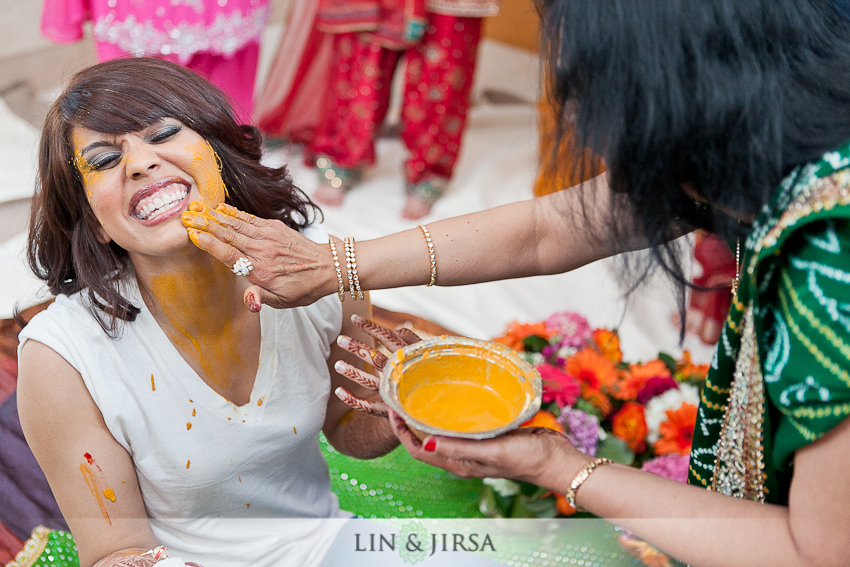
Turmeric, referred to as Haldi in Hindi, is a staple of Indian cooking and also the central ingredient in the pre-wedding Hindu event known as the Haldi, or Pithi, ceremony. Known for its anti-inflammatory, healing, and antiseptic properties, Haldi functions as a cleansing ritual for the bride and groom before the wedding. Its deep mustard-yellow hue carries strong auspicious meaning in Indian tradition, representing prosperity and good fortune for the couple beginning their new life together.
One of the central purposes of the ceremony is to rid the couple of Buri Nazar, the Sanskrit term for the evil eye. The belief is that the purifying qualities of turmeric create a protective energy around the bride and groom. After the ceremony concludes, both are expected to remain within their respective households to guard against any negative influences before the wedding day itself.
The Haldi Paste
Haldi is most commonly found in powder form, but for this ceremony it must be transformed into a paste for application. The ingredient list varies by family and regional tradition, but the core components are consistent: turmeric powder (Haldi), rose water or plain water, and sandalwood powder. Some families incorporate milk, yogurt, or chickpea flour depending on their background and preference. The result is a thick, fragrant paste with a pungent, earthy scent that fills the room from the moment the ceremony begins.
The ceremony is typically held the day before the wedding or on the morning of the wedding day, though the morning timing can be difficult to coordinate given how tightly scheduled wedding days tend to run. It takes place at the respective homes of the bride and groom separately, since from the moment the Haldi is applied, the couple is not permitted to see each other until the wedding ceremony itself.
The Haldi Ritual: How It Unfolds
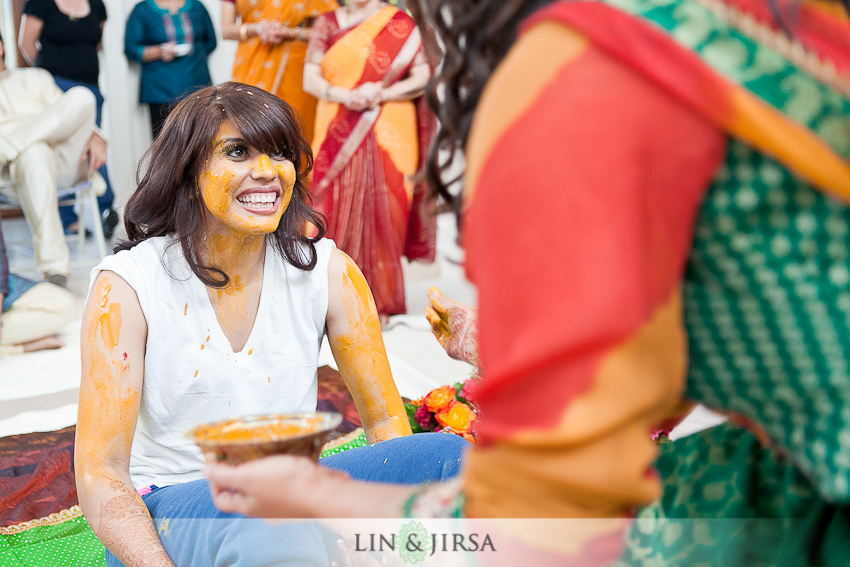
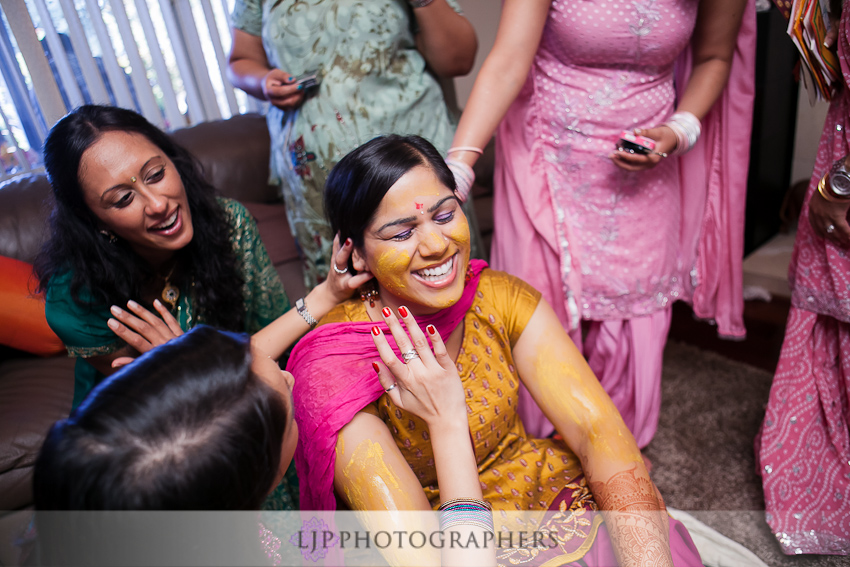
The paste is applied with mango leaves by relatives of the couple to five specific body parts: the face and neck, arms, hands, knees, and feet. Both the bride and groom wear traditional clothing for the occasion, the bride in a sari and the groom in a kurta pajama, even though the Haldi will stain everything it contacts. The mess is part of the tradition, and experienced families tend to plan their outfit choices around it.
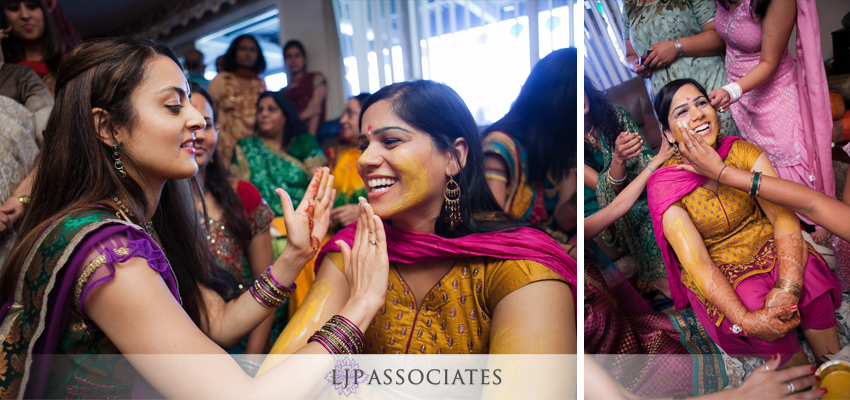
As the application continues, family members gather to sing traditional songs that have been sung at Haldi ceremonies for generations. Each relative takes a turn, placing a small amount of the paste on the bride or groom, offering blessings while participating in the cleansing. The combination of song, laughter, and the bright yellow paste creates an atmosphere unlike any other part of the wedding weekend.
In many regional traditions, the couple also applies a small portion of the Haldi paste to their unmarried friends and siblings. The playful folklore behind this practice holds that whoever is touched by the paste is soon to find a good partner of their own. At the end of the ritual, family members wash the Haldi from the bride and groom, revealing the natural glow the turmeric is said to bring to the skin.
Photographing the Haldi Ceremony
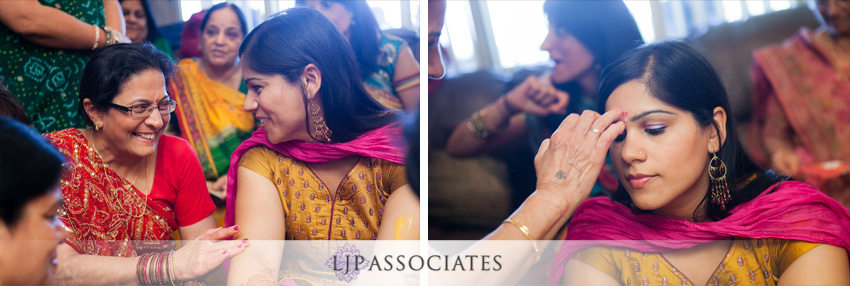
The Haldi ceremony is one of the most photographically rich events of any Indian wedding weekend, and also one of the most technically demanding. The bright yellow paste creates a color palette unlike anything else on the day, and the genuine, unscripted emotion between family members gives every frame a sense of life that posed portraits rarely match.
From a practical standpoint, the ceremony moves quickly and unpredictably. Knowing where to position ahead of each application, reading the room for who is about to step forward, and anticipating the exact moment of reaction are skills that come from shooting many of these ceremonies over time. The paste can also get onto camera equipment, so lens protection and quick transitions between positions are part of how we approach the event.
Lighting at home ceremonies varies widely, from bright open courtyards to dark interior rooms, often within the same event. We always scout the space before the ceremony begins and identify the strongest light sources, whether that is an open doorway, a window, or natural outdoor light. The goal is to let the color of the ceremony speak for itself without losing the warmth of the moment to flat or harsh light.
Our team has documented Haldi ceremonies across Southern California and beyond, working with families from Gujarati, Punjabi, South Indian, and Rajasthani traditions, each with their own specific customs and energy. As Los Angeles wedding photographers with deep experience in South Asian weddings, we understand how meaningful it is to get these pre-wedding rituals right on camera, not just technically, but in terms of which moments carry the most cultural weight.
What to Wear and What to Expect as a Guest
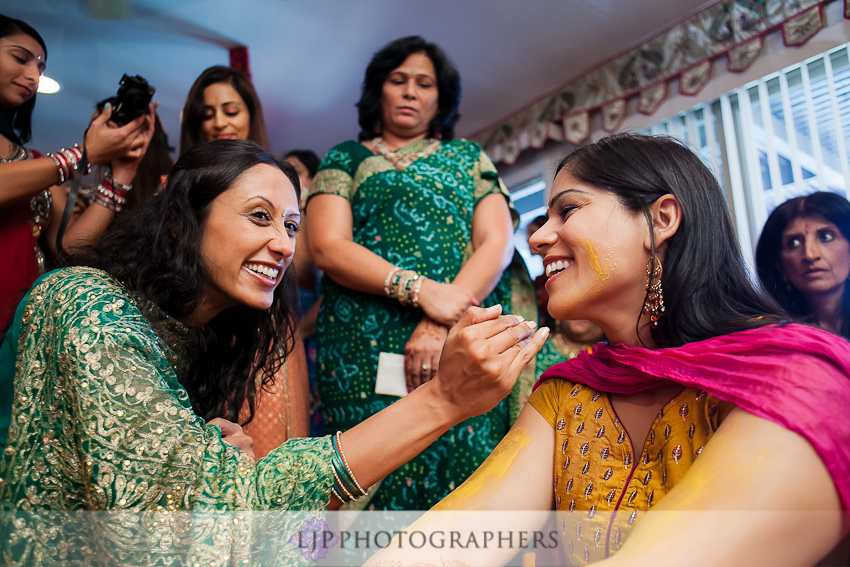
If you are attending a Haldi ceremony as a guest, the most important practical consideration is your clothing. Turmeric stains fabric permanently, and the paste travels further than you might expect. Most guests choose older clothing or brightly colored outfits in yellow, orange, or green that will not show the stain. White is strongly discouraged.
The mood is celebratory and informal compared to the wedding ceremony itself. Children are usually present, music is playing throughout, and the boundary between participant and observer is loose. Expect to be pulled in, expect laughter, and expect the kind of candid family moment that formal events rarely produce. It is one of the most honest windows into a family’s warmth and history that the entire wedding weekend offers.
Haldi Ceremony: Frequently Asked Questions
What is the purpose of the Haldi ceremony?
The Haldi ceremony cleanses and purifies the bride and groom before their wedding. The turmeric paste is believed to ward off evil spirits, specifically Buri Nazar (evil eye), and to bring a natural glow to the skin. It is also a deeply social event where family members offer blessings through participation in the ritual.
When does the Haldi ceremony take place?
It is typically held the day before the wedding, though some families schedule it on the morning of the wedding day. The ceremony takes place separately at the homes of the bride and the groom, since they are not permitted to see each other once the paste has been applied.
Does turmeric actually benefit the skin?
Turmeric has well-documented anti-inflammatory and antioxidant properties. Many brides and grooms report that the Haldi paste leaves their skin noticeably bright and smooth in the hours following the ceremony, which is one reason it has been practiced as a pre-wedding beauty ritual for generations.
Is the Haldi ceremony the same as the Pithi ceremony?
Yes. Haldi and Pithi refer to the same ritual. Haldi is the Hindi word for turmeric; Pithi refers to the paste itself. The name used varies by regional tradition and family preference, but the ceremony and its meaning are the same.
Does Lin & Jirsa cover Haldi ceremonies as part of wedding packages?
Yes. We document the full scope of Indian wedding weekends, including pre-wedding rituals like the Haldi, Mehendi, and Sangeet. Coverage of individual events can be added to any package. See why many of our Indian wedding couples choose combined photo and video coverage to capture every element of their multi-day celebration.
What should guests wear to a Haldi ceremony?
Old or brightly colored clothing is the standard advice. Turmeric stains are permanent, so avoid anything you want to keep clean. Yellow, orange, and green are popular choices among guests. White clothing is strongly discouraged.
Photographing Your Haldi Ceremony with Lin & Jirsa
The Haldi ceremony deserves the same care and attention as any formal event on your wedding weekend. Lin & Jirsa has documented Indian weddings across Southern California for over a decade, and we bring the same level of preparation to pre-wedding rituals as we do to ceremony and reception coverage.
Contact us today to check your date and start planning your Indian wedding coverage.